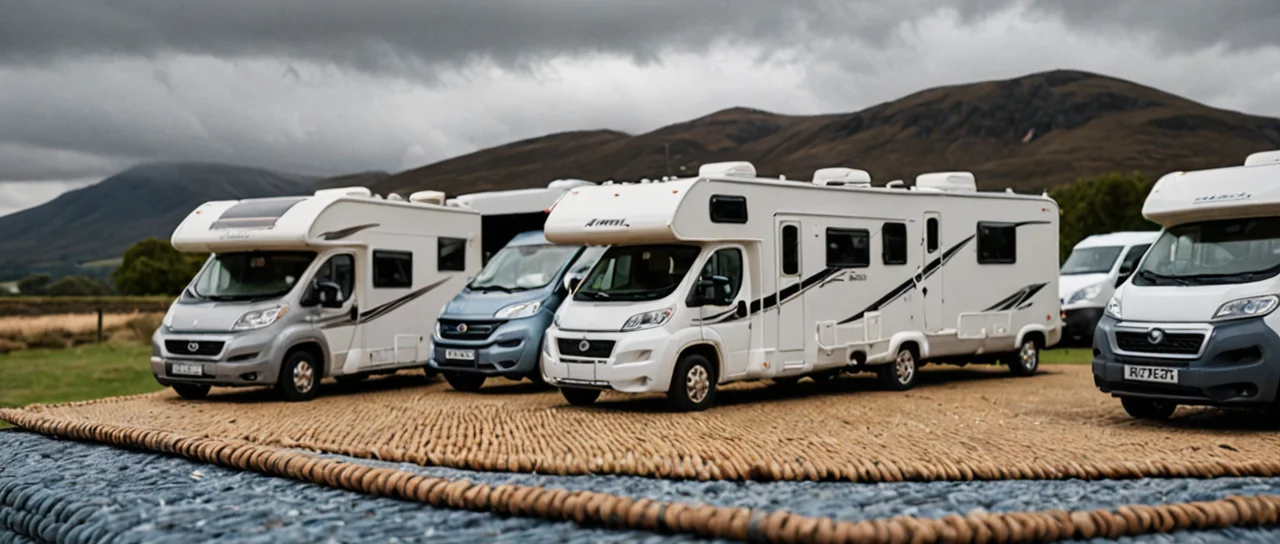


The destination guide that matters is not the one about the scenery. It is the one that tells you whether your rig physically fits through the gate, whether the campground road will scrape your plumbing, and whether the site you booked has the amperage your air conditioner needs in July. Every other decision — which park, which loop, which season — hangs off those three.
Length limits are measured differently than most RVers assume, and that changes what you can book
Most national park campgrounds publish a combined-vehicle length limit, not a motorhome length. That means the number covers the whole train: motorhome plus towed vehicle, or truck plus trailer, bumper to bumper. A 32-foot Class C towing a flat-towed SUV is a 50-foot combination at the entrance station even though the motorhome itself is well under 40 feet.
Yellowstone illustrates how uniform the headline numbers look and how little that tells you. Madison Campground publishes a typical RV length limit of 40 ft combined, and Fishing Bridge RV Campground publishes the same 40 ft combined limit. Same number, very different campground. Fishing Bridge is the park's full-hookup option and the one people book when they want to run the air conditioner and the microwave at once; Madison is dry camping with a different road profile and different site geometry. The published limit is a ceiling, not a promise that a 40-foot combination will be easy to place on any given site. Reserve the moment the booking window opens and read the site-specific notes, because the loop matters as much as the number.
Olympic shows the spread you should expect across a single park. Kalaloch Campground publishes a typical 35 ft combined limit. Heart o' the Hills Campground publishes a strict 21 ft combined limit. That 21-foot figure eliminates most Class C motorhomes, nearly every Class A, and any travel trailer long enough to have a separate bedroom. It does not eliminate a Class B camper van built inside a standard commercial van body, which is exactly why that class of vehicle exists. If your trip plan is "Olympic in one loop," the Heart o' the Hills number is the one that decides which rig you can bring.
Where this goes wrong in practice: you measure the motorhome, book against the motorhome number, and arrive with a toad. Or you measure the trailer and forget the tongue and the hitch overhang. Measure the actual combination on flat ground with the tow bar connected, write the number down, and treat it as your hard ceiling. Then subtract a margin for the site pad, because the published limit is about getting in, not about whether the slide will clear the picnic table.
Public campgrounds, private RV resorts, and boondocking are three different products with three different failure modes
Public campgrounds — national parks, national forests, state parks, Corps of Engineers — give you location and space and charge accordingly less, and in exchange they give you a narrow site, a road that was graded for cars, and often no hookups. Private RV resorts give you full hookups, pull-through sites, and a level pad, at a nightly rate that can run several times the public option, and they put you outside the park gate rather than inside it. Boondocking on public land gives you the most space and the lowest cost and asks you to arrive with full water, empty waste tanks, and enough battery and solar to run your fridge without running your generator past quiet hours.
The decision order is fixed, and it is not the order most people use. Start with the destination and its length limit, because that determines whether your rig is even eligible. Then decide hookups versus no hookups, because that determines whether you can run the air conditioner, the microwave, and the coffee maker in the same morning. Then decide inside-the-gate versus outside-the-gate, which is a time trade: a private resort a few miles out costs you a drive in and out every day, and that drive is the thing people underestimate on a four-day park visit.
What each choice costs honestly. A public campground with no hookups means you are managing battery state and propane, and in cold weather you are managing the furnace, which is the biggest draw in the rig. A private resort with full hookups means you are paying for the privilege and likely driving to the scenery. Boondocking means you are your own utility company and you carry your waste out or dump on the way. None of these is the right answer for every trip; the mistake is booking a hookup-dependent rig into a dry campground and discovering it at dusk.
Season and reservation windows shape the trip more than the destination does
The reservation window opens on a schedule that varies by agency and by park, and the popular campgrounds fill within minutes of opening. The practical consequence is that your trip date is chosen months before you leave, and your destination guide has to be written against a date, not a wish. Build the plan backwards: pick the park, find the opening date for the specific campground you want, and be at the keyboard when it opens. If you miss it, the fallback is cancellation watching — sites get released closer to the date as people change plans — and the secondary fallback is the private campground outside the gate, which is why you should know its name before you need it.
Season changes the rig requirements, not just the crowds. Shoulder-season nights in mountain parks drop below freezing, which means the water system needs attention. Winterizing a travel trailer water system with RV-specific antifreeze rated for burst protection to -50 °F is the standard for storage, and the number to understand is that it is a burst-protection rating, not a comfort rating — it tells you the plumbing will not split, not that you can camp comfortably at that temperature. If you are traveling in cold shoulder seasons rather than storing, you are running the furnace, watching the tank heaters if you have them, and keeping an eye on the low-point drains.
The other seasonal variable is heat. A rig with one air conditioner and a 30-amp service cannot run the air conditioner and much else at once; a 50-amp rig with two air conditioners can. That difference decides whether a mid-summer booking in a full-hookup site is comfortable or miserable, and it is the reason the hookup decision comes before the destination decision, not after.
The rig class you drive determines which guides apply to you at all
A Class B motorhome is built inside a standard commercial van body with the original van cab intact, and its short overall length is the reason it clears the strict limits that stop everything else — a 21 ft combined limit is reachable for a camper van and out of reach for most other classes. The trade is interior volume: sleeping, cooking, and often bathing are packed into the van shell, and a rainy day inside is a real constraint. A Class B is also the easiest rig to drive into a town, park in a normal space, and turn around on a narrow road.
A Class C motorhome is built on a cutaway van or light truck chassis with a cab-over section above the driver's area, usually a bed or storage, and the driving compartment forms part of the interior. The cab-over buys you a sleeping area without lengthening the rig much, which makes a Class C the common choice for a couple or small family that wants a walkable interior and still fits under typical 35-foot and 40-foot combined limits. The trade is that the cab-over adds height and a wind profile, and the overhang behind the rear axle is the part that scrapes on steep driveway transitions.
A Class A motorhome is built on a bus or heavy commercial truck chassis with a fully integrated body — driving compartment and living quarters in one continuous interior. It gives you the most living space and the most storage, and it is the class most likely to run into published length limits. A 40-foot combined limit is achievable for a Class A only if you do not tow, or tow something small, because the combined number includes the towed vehicle. The trade is that a Class A is the hardest rig to maneuver into a tight public campground site and the one most dependent on pull-through sites in private resorts.
A travel trailer is a towable RV with living quarters, hitched to a tow vehicle rather than self-propelled, typically with sleeping, cooking, and basic bathroom facilities inside an enclosed body. It gives you the advantage of unhitching: drop the trailer at the site and drive the truck into town or up the scenic road. The cost is that the combined length includes the tow vehicle, and the hitching, leveling, and sway-control routine adds time at every stop. A travel trailer is also the class most exposed to the combined-length rule, because a long trailer plus a full-size truck can exceed a 35-foot or 40-foot limit even when neither piece looks large on its own.
What a destination guide has to tell you before you book, and what it usually leaves out
The four things that decide whether a campground works for your rig are the combined length limit, the road profile into and through the campground, the site pad — length, width, level, and what the slide will hit — and the hookups. A guide that gives you the length limit and nothing else has given you the easy half. The road profile is where people get into trouble: a steep approach, a tight turn at the entrance station, low branches over the loop road, and a site that requires backing uphill. None of that shows up in the published limit.
The site pad is the second half. A pull-through site is worth paying for when you are staying one night and do not want to unhitch; a back-in site is fine when you are staying a week and have a spotter. Level matters more than people expect, because a rig that is out of level by more than a small amount runs the refrigerator poorly and puts stress on the slides and the leveling system. Width matters when you have slides on both sides and a picnic table and a fire ring in the same footprint.
Hookups are the third half, and the one most often summarized as "has hookups" without saying which. Water, electric, and sewer are three separate questions. Electric service is the one that decides what you can run: the amperage at the pedestal sets your ceiling, and the adapter you carry determines whether you can plug a 50-amp rig into a 30-amp pedestal and accept the reduced capacity. A guide that says "full hookups" without the amperage has told you almost nothing.
The fourth thing is the one guides skip because it is not a number: what the campground is actually for. A campground inside a park gate is for early starts and late returns; a campground outside the gate is for people who want a base with amenities. A boondocking spot on public land is for people who are self-contained. Knowing which product you are booking is the difference between a trip that works and a trip spent driving.
Build the trip in this order and the destination guide does its job
Measure your actual combined length first, with the tow vehicle attached, and treat that as the filter. Then find the campgrounds in your target park and compare their published limits against your number — a 21 ft strict limit and a 40 ft typical limit in the same park system are not the same trip, and the strict one eliminates most rigs outright. Then check the road profile and the site pad notes for the specific loop, not just the campground. Then decide hookups versus no hookups against the season and the forecast, because the amperage and the air conditioner are a summer question and the furnace and the water system are a shoulder-season question. Then book on the opening date, and have a named fallback outside the gate.
The trade you are making at every step is between location and convenience. Inside the gate with no hookups buys you the park at dawn and asks you to manage your own power and water. Outside the gate with full hookups buys you comfort and charges you the drive. A shorter rig buys you access to the strict-limit campgrounds and charges you interior space. A longer rig buys you living room and charges you the sites you cannot book. There is no configuration that wins on every axis, which is why the guide has to be read against your rig and your date rather than as a list of places.
The limits of this approach are real. Published limits are typical or strict as noted, and they change; a number that was accurate when a guide was written may not be the number on the reservation system today. Confirm against the agency's current listing before you book, and confirm again before you drive. The guide tells you what to check and in what order; the agency's own page is the authority on the day.