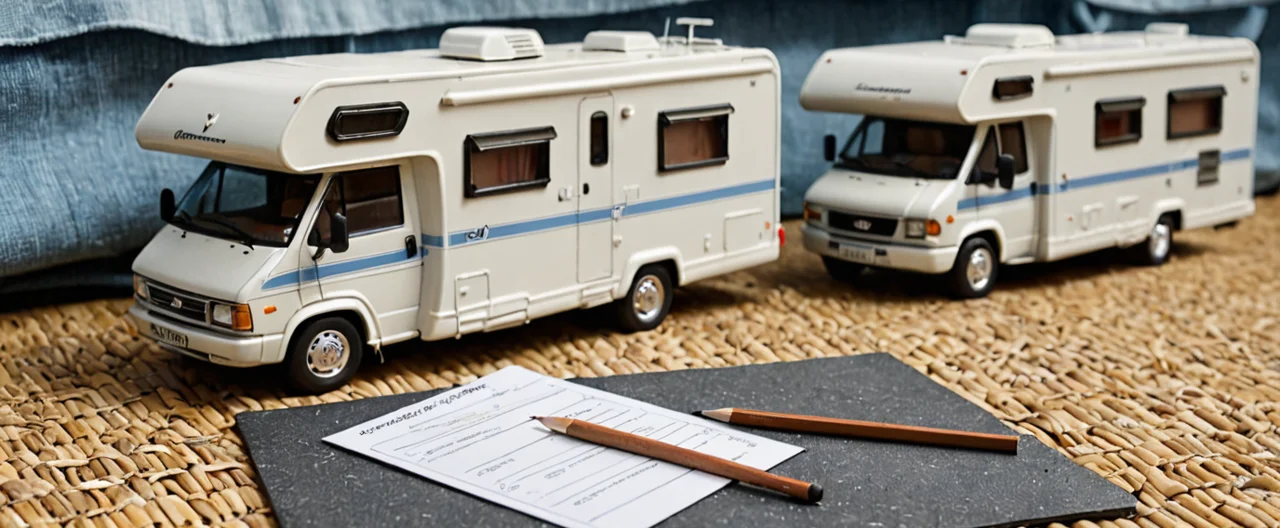


Trip planning for an RV starts with two hard numbers before it starts with anything else: the combined length of your rig and the length limit of the campground you want. Everything else — the route, the fuel stops, the water, the reservations — hangs off whether you can physically fit through the gate. Get those two numbers wrong and the rest of the plan is decoration.
Measure the rig the way the campground measures it
Campgrounds publish a combined vehicle length, and that is not the length of your motorhome or your trailer. It is the motorhome plus the towed vehicle, or the truck plus the trailer, bumper to bumper with the hitch in between. A 31-foot travel trailer behind a full-size pickup is not a 31-foot rig; it is a rig in the high 40s once the truck is counted. That single misunderstanding causes more rejected reservations and more turned-away arrivals than anything else in this hobby.
The published limits are real and they are enforced unevenly, which is worse than being enforced strictly. In Yellowstone, Madison Campground and Fishing Bridge RV Campground both typically publish a 40 ft combined limit. Forty feet sounds generous until you do the arithmetic on a crew-cab truck and a mid-size bunkhouse trailer. In Olympic National Park the spread is wider and more punishing: Kalaloch Campground typically publishes 35 ft combined, and Heart o’ the Hills Campground publishes a strict 21 ft combined limit. Twenty-one feet is a camper van or a very small trailer behind a very small tow vehicle. A Class C motorhome on a cutaway van chassis is frequently longer than that on its own, before anything is towed.
Measure your rig yourself, loaded, on flat ground, with the tow vehicle hitched and the tongue jack down. Manufacturer spec sheets quote the box length or the body length and leave out the hitch gear, the rear ladder, the spare tire carrier, and the tongue. Add those. Write the number on a sticky note and put it in the glovebox, because you will need it every time you book.
The limit is a ceiling, not a target. A site rated to exactly your length is a site where you will spend twenty minutes backing in with a spotter and still clip a picnic table. Booking a site a few feet longer than your rig buys you maneuvering room, and maneuvering room is what separates a pleasant arrival from a divorce proceeding in a gravel loop at dusk.
Book the campground before you plan the route
Reserve the campsites first and build the drive around them, not the other way round. The reservation is the scarce resource; the road is not. This is the reverse of how most people plan a vacation, and it is the single biggest change that makes RV trips stop falling apart.
The reason is that campsite inventory is fixed and demand is not. A national park campground with a published length limit also has a fixed number of sites that fit your length, and those sites are the first to go. If you plan a beautiful loop through three parks and only then discover that the middle night has no site that fits you, you are not choosing between three campgrounds — you are choosing between a boondock on federal land outside the gate, a private park an hour away, or driving straight through. All three are legitimate, and all three are worse than having booked first.
The order of operations that works: pick the destination and the dates, check the length limit and availability at the campgrounds inside it, book what fits, then route between them. When nothing fits, that is information about the destination, not a failure of planning. A park whose campgrounds top out at 21 ft combined is a park you visit in a camper van or not at all.
The cost of booking first is flexibility. Reservations carry cancellation windows and change fees, and a booked trip is harder to reroute when the weather turns or a road closes. If you are the kind of traveler who wants to follow the weather, book only the first and last nights and accept that the middle of the trip may end up in a Walmart parking lot or a dispersed site on public land. That is a real trade, not a compromise — some of the best nights on an RV trip are unplanned — but it is a choice you make deliberately, not one that gets made for you at 6 p.m. with the family hungry.
Match the rig class to the trip, not the other way round
The four rig classes fail in different places, and the trip you are planning should pick the class rather than the class dictating the trip. A Class A motorhome is a bus-shaped, self-propelled unit on a bus or heavy commercial truck chassis with the driving compartment and living quarters fused into one continuous interior. It carries the most, tows a car behind it, and is the worst possible choice for a campground with a 21 ft combined limit or a switchback road with a low overhang. A Class C is built on a cutaway van or light truck chassis with a cab-over section above the driver — more compact than an A, still self-propelled, still towing nothing unless you add a toad. A Class B, the camper van, is built inside a standard commercial van body with the original cab intact; it fits where nothing else fits and it is cramped in the rain. A travel trailer is towable, hitched to a separate tow vehicle, and gives you a truck you can unhitch and drive to town — at the cost of the combined length that closes doors at the smallest campgrounds.
The honest trade-off is that the rig that is best at the campsite is the worst on the highway and vice versa. A camper van gets into Heart o’ the Hills at 21 ft combined; it is also the rig where four days of rain means four days of sitting shoulder to shoulder. A 40-foot Class A with a toad is a comfortable apartment that cannot enter most of the campgrounds in the older national parks. There is no rig that solves both, which is why experienced RVers talk about their second rig the way other people talk about their second marriage.
Length is also a routing constraint, not just a booking constraint. Long rigs are restricted on some mountain roads, banned from some tunnels, and unwelcome on scenic byways with tight turns and overhanging rock. Check the route for length and height restrictions before you commit to it, not after.
Plan the utilities around the seasons, not the calendar
Water is the utility that decides most trips, and it has two failure modes: freezing and running out. A travel trailer water system winterized with RV-specific antifreeze is protected to a burst temperature of -50 °F, which sounds like an enormous margin and is — for the antifreeze. The protection applies to a system that has been properly winterized, meaning the water is out and the pink stuff is in. A system with water in it, or a system that is partially winterized because someone got tired halfway through, has no protection at all, and the failure shows up as a cracked fitting or a split water heater tank discovered in the spring.
So the seasonal decision comes before the route. If overnight temperatures will drop below freezing, either the trip is a winterized trip with no running water and jugs in the sink, or the trip moves south, or the rig has a heated wet bay and you are paying for the fuel to run it. There is no fourth option. Campgrounds close their water spigots for the season and dump stations shut down, which turns a comfortable trip into a logistics exercise.
Power is the second utility and it is simpler: know whether you are plugging in, running a generator, or relying on battery and solar, and plan the number of nights accordingly. A full-hookup site removes the question entirely. A dry site with no generator hours and a cloudy forecast is a short trip. Fill the fresh tank before you leave, know where the next dump station is, and treat the black tank as a schedule item rather than a surprise.
The cost of planning utilities tightly is that you carry less slack. The cost of not planning them is a cold night, a dead battery, or a tank you cannot empty. Most people land somewhere in the middle: full hookups for the long stays, dry camping for the one or two nights that make the trip worth taking.
Build the drive day around arrival, not distance
Plan each driving day to arrive at the campground with daylight left to spare, and let the mileage fall out of that. Arrival is the hard part of an RV day — backing into a site, leveling, hooking up water and power, and finding out the site is shorter or less level than the listing suggested. Doing that in the dark, tired, with a spotter waving a phone flashlight, is how people damage rigs and relationships.
Two things set the arrival time: the distance and the speed. RV travel averages far below highway speed once you account for fuel stops, a slower comfortable cruising speed, and the fact that a long rig does not take mountain grades at the same rate as a car. Build the day backward from the arrival you want, subtract the fuel and food stops, and see what distance remains. If the number looks small compared with what you would drive in a car, that is correct and not a sign you are doing it wrong.
Fuel stops deserve their own line in the plan. A rig towing a trailer cannot back out of a standard gas station, so you want stations with room to pull through, and you want to know where they are before the tank is low. Apps and truck-stop chains solve this; the plan is to use them rather than hope. Running a long rig into a tight urban station with a low canopy is the other classic way to damage something.
The trade-off here is time. Short driving days mean fewer miles covered, which means either a smaller trip or a longer one. A trip that covers a big loop in a short window is a trip spent mostly driving. The people who love RV travel usually love it because they stopped trying to cover ground.
Leave slack in the plan for the things that always change
Build at least one unbooked day into any trip longer than a few nights, and treat it as part of the plan rather than a failure to plan. Weather, closed roads, a rig problem, a campground you fall in love with and do not want to leave — all of these consume schedule, and a plan with zero slack turns a minor delay into a cascade of missed reservations.
The slack day is also where the best parts of a trip happen. The unplanned stop at a state park, the second night at a site you liked, the day you spend fixing something in a parking lot and meet three other RVers doing the same. Rigid itineraries produce trips that are technically complete and emotionally flat.
What slack costs is certainty. You may not know where you are sleeping on the slack night until that afternoon, and in peak season near a popular park that may mean a private campground outside the gate or a dispersed site on public land with no hookups. Know the fallbacks before you need them: which nearby private parks take same-day reservations, which public lands allow dispersed camping, and whether your rig can handle a night without hookups. That list is the real safety net, and it is worth more than any itinerary.
The test of a good RV trip plan is not whether it survived contact with reality unchanged. It is whether, when something changed, you had somewhere to go and enough daylight to get there. Length number in the glovebox, campsite booked before the route, rig matched to the campground rather than the brochure, utilities planned for the season, arrival planned for daylight, and one day of slack. That is the whole method, and it works at 21 ft and at 40 ft alike.