The RV lifestyle is a set of trade-offs you make before you ever turn the key: what you drive, where it can legally go, how you keep water and power running off-grid, and how much of your life you are willing to compress into a box that moves. Get those four decisions in the right order and the lifestyle is cheap, slow, and genuinely restful. Get them wrong and you end up with a rig that cannot enter the campgrounds you want and a monthly bill that looks like a second mortgage.
Choosing the rig is the decision that locks in everything else
Pick the rig last, not first. The vehicle class determines your campsite options, your fuel bill, your tow setup, and whether a second vehicle is even possible — so the useful sequence is to decide where you want to camp and how far you want to move, then buy the thing that fits those two answers.
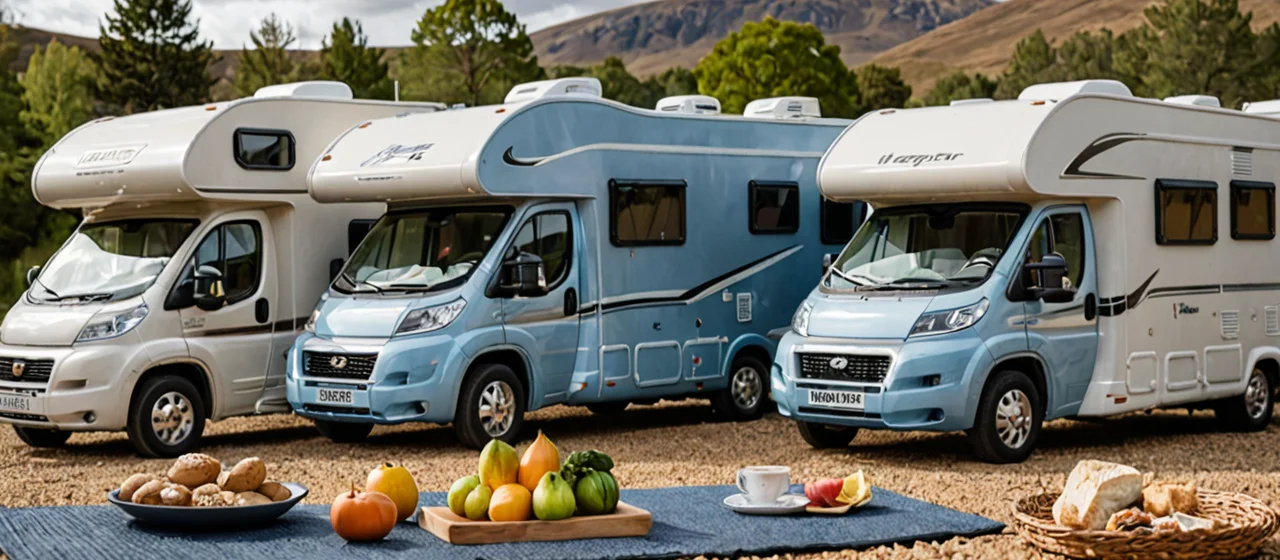
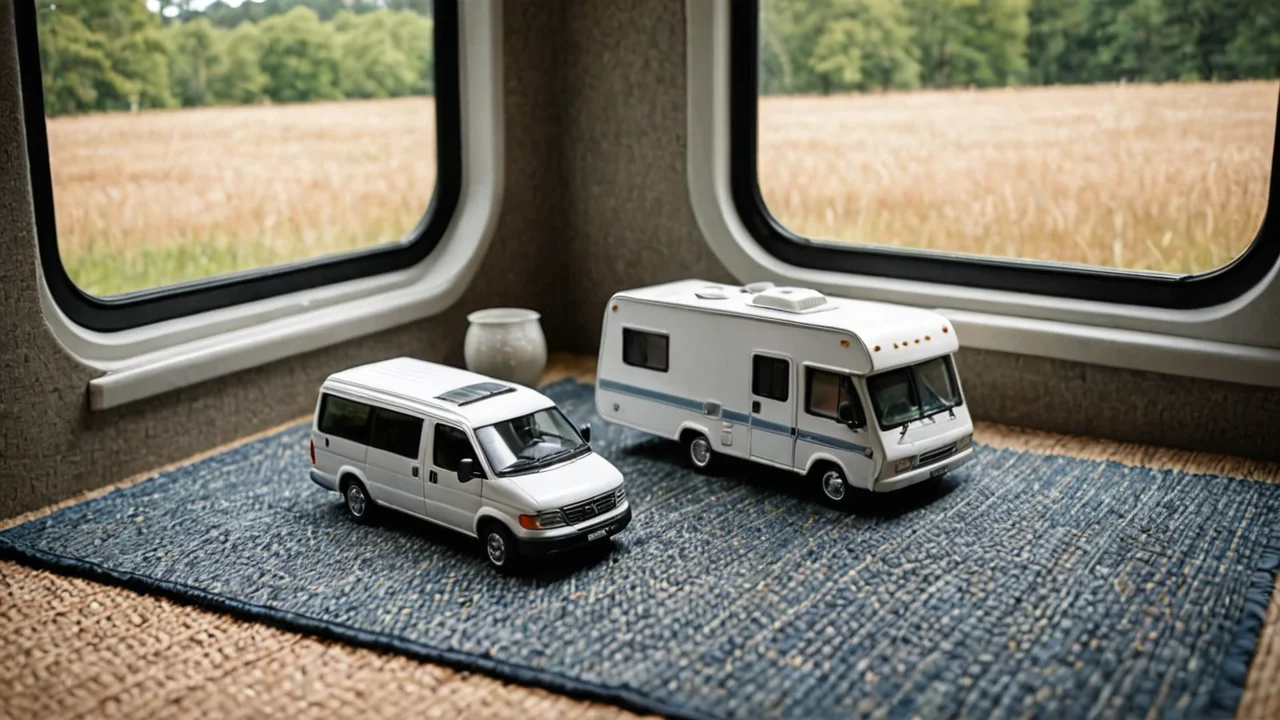
The four classes behave very differently in practice. A Class A motorhome is a bus-shaped, self-propelled rig on a bus or heavy commercial truck chassis, with the driving compartment and living quarters fused into one continuous interior. It gives you the most living space and the most storage, and it is the worst choice if you want to run errands without breaking camp — everything you own moves when you drive to the grocery store. A Class C motorhome sits on a cutaway van or light truck chassis with a cab-over section above the driver that usually holds a bed or storage; the driving compartment is part of the interior. It is the middle ground most families land on, and the cab-over bunk is the reason — it adds sleeping capacity without adding much length. A Class B motorhome, the camper van, is built inside a standard commercial van or panel truck body with the original van cab intact, outfitted for sleeping, cooking, and often bathing in a very compact shell. It drives like a van, parks like a van, and is the only class that lets you treat a city street or a trailhead lot as a legitimate overnight stop. The cost is space: a Class B is a one-or-two-person rig, and long trips in wet weather test that limit fast.
A travel trailer is towable — hitched to a tow vehicle rather than self-propelled, with sleeping, cooking, and basic bathroom facilities inside an enclosed trailer body. It is usually the cheapest way into the lifestyle per square foot, and it has one structural advantage the motorhomes do not: when you unhitch, your tow vehicle becomes a normal car. The trade-off is that you now own and maintain two drivetrains, you need a tow-rated truck or SUV, and hitching, sway control, and weight distribution become part of every travel day. Fifth wheels sit in the same towable family and behave differently again on payload and height, but the ownership logic is the same.
The honest limits: a Class A or a large travel trailer is the right answer only if your travel pattern is "drive a few hours, stay a week." If your pattern is "move every day or two and stop in towns," a Class B or a small trailer will cost you less in fuel and open campsites that a big rig physically cannot enter.
Length limits are the constraint nobody checks until it ruins a trip
Measure your rig, bumper to bumper, including the towed car or the trailer tongue, and write that number down before you book anything. Campground limits are almost always published as combined vehicle length — motorhome plus towed vehicle, or truck plus trailer — not the length of the box you sleep in. That distinction is where most people get caught, because a 30-foot trailer behind a full-size truck is not a 30-foot combination.
The spread between parks is wide enough to change your buying decision. In Yellowstone, the typical published limit at Madison Campground is 40 ft combined, and Fishing Bridge RV Campground publishes the same 40 ft. In Olympic National Park, Kalaloch Campground publishes 35 ft combined, and Heart o' the Hills Campground enforces a strict 21 ft combined limit. Twenty-one feet combined is a camper van or a very small trailer behind a very small tow vehicle — nothing else gets in. A rig bought for Yellowstone's 40-foot ceiling is locked out of Heart o' the Hills entirely.
| Campground | Published limit (combined length) | What that realistically allows |
|---|---|---|
| Madison, Yellowstone | 40 ft | Most Class A and Class C motorhomes; large trailers with a modest tow vehicle |
| Fishing Bridge RV, Yellowstone | 40 ft | Same ceiling, but this is the park's full-hookup RV campground |
| Kalaloch, Olympic | 35 ft | Mid-size motorhomes, camper vans, smaller trailer-and-truck combinations |
| Heart o' the Hills, Olympic | 21 ft | Camper vans and the smallest trailer setups only |
The reasoning behind the numbers is physical, not bureaucratic: these are older campgrounds with narrow interior roads, tight turns, and tree trunks that do not move. A rig that technically fits the stated length can still fail on a switchback or a low branch, so the published limit is a ceiling, not a guarantee.
What this costs you: shorter rigs trade living space for access. If your bucket list is mostly national park campgrounds, buy to the tightest limit you expect to meet, not the loosest. If you plan to stay in private RV parks and boondock on public land, length limits matter far less and you can buy the space you actually want.
Water is the system that fails first, and winterizing is where it fails hardest
Learn your freshwater system before your first trip, because it is the part of the RV that causes the most expensive and most preventable damage. There are three tanks — fresh, gray (sinks and shower), and black (toilet) — and the discipline of the lifestyle is keeping them straight: what goes in the fresh tank, what goes down the drains, and what goes into the toilet are three different decisions.
Winterizing is the annual job that punishes anyone who skips it. Water left in lines, the water heater, the pump, and the toilet valve freezes, expands, and splits fittings that are buried behind cabinets. The standard method is to drain everything, bypass and drain the water heater, then push RV-specific antifreeze through the lines with the pump until it runs pink at every tap, shower, and toilet. RV antifreeze is rated by burst protection temperature, and the figure to look for on the jug is -50 °F. That number is the protection rating of the product, not a promise about your rig — diluted antifreeze, or antifreeze pushed through a line that still held water, protects to a much warmer temperature than the label says. The way you notice you got it wrong is a cracked fitting in spring, a pump that runs constantly, or water pooling under the floor.
The trade-off is real: blowing lines out with compressed air is faster and leaves no pink residue to flush out in spring, but air does not protect the pump head or the toilet valve as reliably as fluid does. Many owners do both — air first, then antifreeze — which costs an extra half hour and a second jug. If you store the rig in a hard-freeze climate and skip winterizing entirely, you are accepting a repair bill that will exceed several years of antifreeze.
The limits: winterizing protects the plumbing, not the batteries, the tires, or the seals. A rig stored outdoors through a freeze still needs the batteries on a maintainer, the tires off direct ground contact or inflated to storage pressure, and the roof inspected before the first snow load.
Power off-grid is a budget decision disguised as a technical one
Decide how many days you want to go without hookups, and build the electrical system backward from that number. Almost every off-grid argument about lithium versus lead-acid, or solar versus a generator, dissolves once you know whether you are a weekend boondocker or a two-week dry camper.
The core of the system is the house battery bank, charged by three sources: solar panels on the roof, the engine alternator while driving, and a generator or shore power. Solar is silent and free after the install, but it is weather-dependent and its output falls off sharply when you park in shade — which is exactly what you do in summer. A generator is loud, needs fuel, and many campgrounds restrict its hours, but it works in the rain and under trees. The alternator is the most underused charger in most rigs; a long driving day is the cheapest way to refill a bank.
Lithium batteries cost more up front than lead-acid and deliver more usable capacity for the same stated size, because you can discharge them far deeper without shortening their life. That is the honest trade: pay more now, carry less weight, and stop worrying about damaging the bank by running it down. Lead-acid is cheaper to replace and more forgiving of a crude charging setup, which makes it the sensible choice for a rig used a few weekends a year on hookups.
What goes wrong and how you notice: the fridge that worked fine on shore power drains the bank overnight, the inverter trips when the coffee maker and the microwave run together, and the battery monitor reads full in the morning and empty by dinner. All three are sizing problems, not equipment failures. The limits: no electrical system fixes a rig with poor insulation or a habit of running an air conditioner off batteries — that is a generator or shore-power job, and pretending otherwise is how people end up with an expensive system that still does not do what they wanted.
Campground choice sets the rhythm of the trip more than the destination does
Book the campsite before you plan the route, because the campground type determines how the whole week feels. There are four practical categories, and most trips mix them: public campgrounds in national and state parks, private RV resorts with full hookups, dispersed camping on public land, and everything in between — fairgrounds, wildlife management areas, and small municipal parks.
National park campgrounds are the cheapest and the most scenic, and they are also the ones with the length limits and the reservation scrambles. Full-hookup private parks cost more per night but let you arrive late, run the air conditioner, and take long showers without thinking about tank levels — which matters more than new owners expect. Dispersed camping on public land is free or nearly so and has no amenities at all: no water, no dump station, no trash, and often no cell signal. It is the cheapest way to live in an RV and the least forgiving of a rig that is not self-contained.
The sequence that works: use full-hookup parks to reset — dump tanks, refill fresh water, do laundry, charge everything — then spend the next stretch in public campgrounds or dispersed sites. That rhythm keeps you from paying resort prices every night while still avoiding the two failure modes of dry camping: a full black tank and a dead battery.
The trade-offs are honest ones. Public campgrounds mean reservations months ahead for popular parks, generator hours, and quiet hours. Private parks mean neighbors close enough to hear, plus a nightly rate that adds up fast over a month. Dispersed camping means moving every couple of weeks on many public lands, packing out your trash, and accepting that a breakdown out there is your problem alone. The limit on all of it: a rig that is not self-contained — no shower, no toilet, small tanks — effectively cannot use the cheapest half of the campsite spectrum, which is a strong argument for buying self-containment before you buy size.
The money and the daily routine are what decide whether you stay with it
Budget the lifestyle in three buckets — the rig, the recurring costs, and the reserve — and expect the reserve to be the one that surprises you. The purchase price is the visible number and the least interesting one. Insurance, registration, fuel, campground fees, propane, and maintenance run continuously whether you are moving or parked, and tires, brakes, roof resealing, and appliance repair arrive in lumps rather than evenly.
Fuel consumption scales badly with size: a Class A or a large trailer towed by a truck burns far more per mile than a camper van, and wind and mountain grades make it worse. Campground fees range from free on public land to private resort rates, so the same month of travel can cost wildly different amounts depending on where you sleep. The reserve exists because RV systems fail in inconvenient places — a water pump dies in a campground with no cell service, a slide-out stops retracting the morning you are due to leave.
The daily routine is the part nobody warns you about, and it is what separates people who love this from people who sell the rig after one season. Mornings are tanks, water, and power: check levels, decide whether to run the generator, dump before you move. Travel days are shorter than you think — a few hours of driving in a big rig is tiring in a way a car trip is not, and setting up in the dark is the single most common way a trip starts badly. Evenings are leveling blocks, hookups if you have them, and a walk to check what time quiet hours start.
The honest limit on the whole lifestyle: it is not cheaper than living in a house unless you are deliberate about it. The people who make it work are the ones who bought a rig that fits the campgrounds they actually want, sized the electrical system to the number of days they actually dry camp, and kept a repair reserve they did not spend on upgrades.
Start with the tightest length limit on your must-visit list, decide how many days off-grid you need, and let those two numbers pick the rig. Everything else about the RV lifestyle — where you stay, how often you move, what you spend — follows from those two decisions, and reversing the order is how a dream purchase turns into a driveway ornament.